








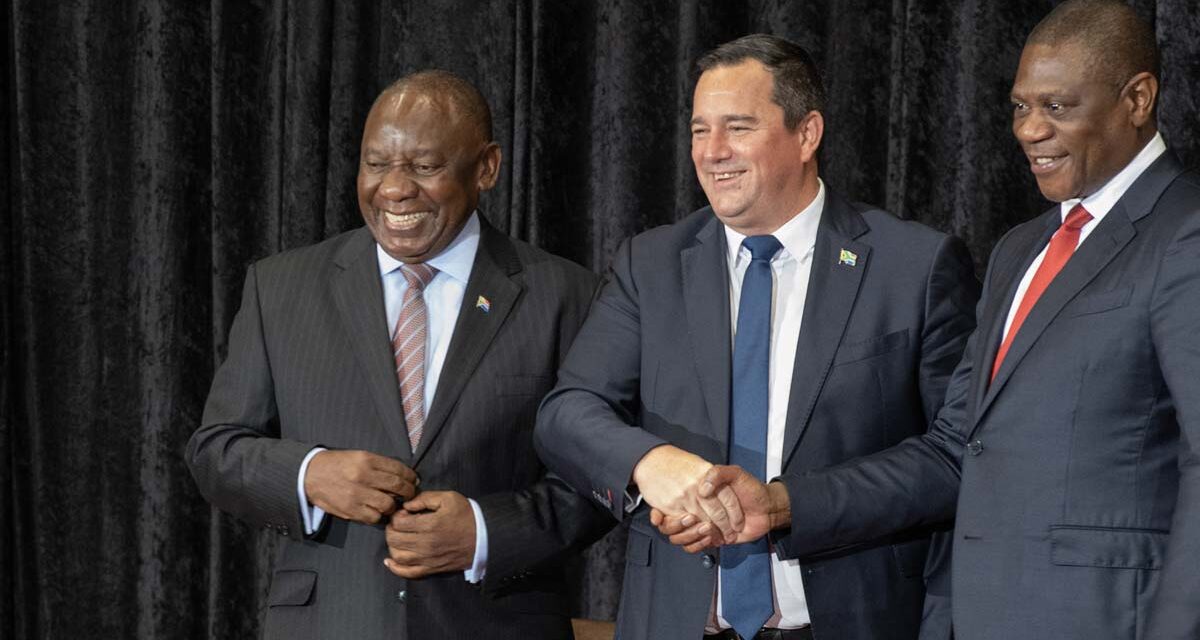
Pretoria, South Africa – May 29, 2025 – One year ago today, following the historic 2024 National and Provincial Elections, South Africa embarked on an unprecedented political experiment: the formation of a Government of National Unity (GNU). Today, as the nation reflects on the past 12 months, Cabinet is hailing the GNU’s establishment and its subsequent operation as a testament to the country’s democratic maturity and a crucial period of political stability.
Minister in the Presidency, Khumbudzo Ntshavheni, addressed the media, commending the political parties involved for their ability to forge a working coalition within a mere 14 days after the election results were declared. “The formation of the Government of National Unity within such a short timeframe was an outstanding achievement,” Ntshavheni stated. “It demonstrated the commitment of our political leadership to prioritize national stability, foster collaboration, and ensure continuity in governance during a complex political transition.”
The GNU, comprising the African National Congress (ANC) and several other parties including the Democratic Alliance (DA), Inkatha Freedom Party (IFP), and others, was born out of an election that saw the ANC lose its outright majority for the first time in 30 years. Its formation was met with a mix of cautious optimism and skepticism.
Over the past year, the GNU has navigated a challenging landscape, grappling with:
- Economic Stagnation: High unemployment (which recently rose to 32.9%), low GDP growth (with Absa CIB now forecasting 1% for 2025), and persistent concerns about fiscal sustainability.
- Infrastructure Deficits: Ongoing power cuts (though less severe than previous years) and logistics bottlenecks.
- Policy Debates: While a framework for collaboration was agreed upon, policy disagreements have occasionally surfaced, particularly around issues like Black Economic Empowerment (BEE) and the role of state-owned enterprises.
Despite these hurdles, the GNU has achieved some notable successes:
- Policy Continuity: Avoiding the political paralysis that could have resulted from a hung parliament.
- Macroeconomic Stability: Maintaining sound fiscal management, as evidenced by the SARB’s recent interest rate cut, and avoiding a financial crisis (as warned by some economists).
- Legislative Progress: Passing key legislation and overseeing government functions, even amidst differing viewpoints.
- Increased International Confidence: The perception of a stable political environment has helped to prevent a significant flight of capital and has contributed to a “reset” of crucial international relations.
Ntshavheni emphasized that the GNU’s success is a testament to the “spirit of compromise and national interest” overriding narrow partisan agendas. “While there have been, and will continue to be, robust debates within the GNU, the underlying commitment to a shared vision for South Africa’s prosperity remains strong,” she added.
As South Africa looks to the next four years of the GNU’s term, the focus will undoubtedly shift from simply establishing stability to demonstrating its ability to deliver tangible improvements in the lives of ordinary citizens, particularly in the areas of job creation, service delivery, and economic growth.