












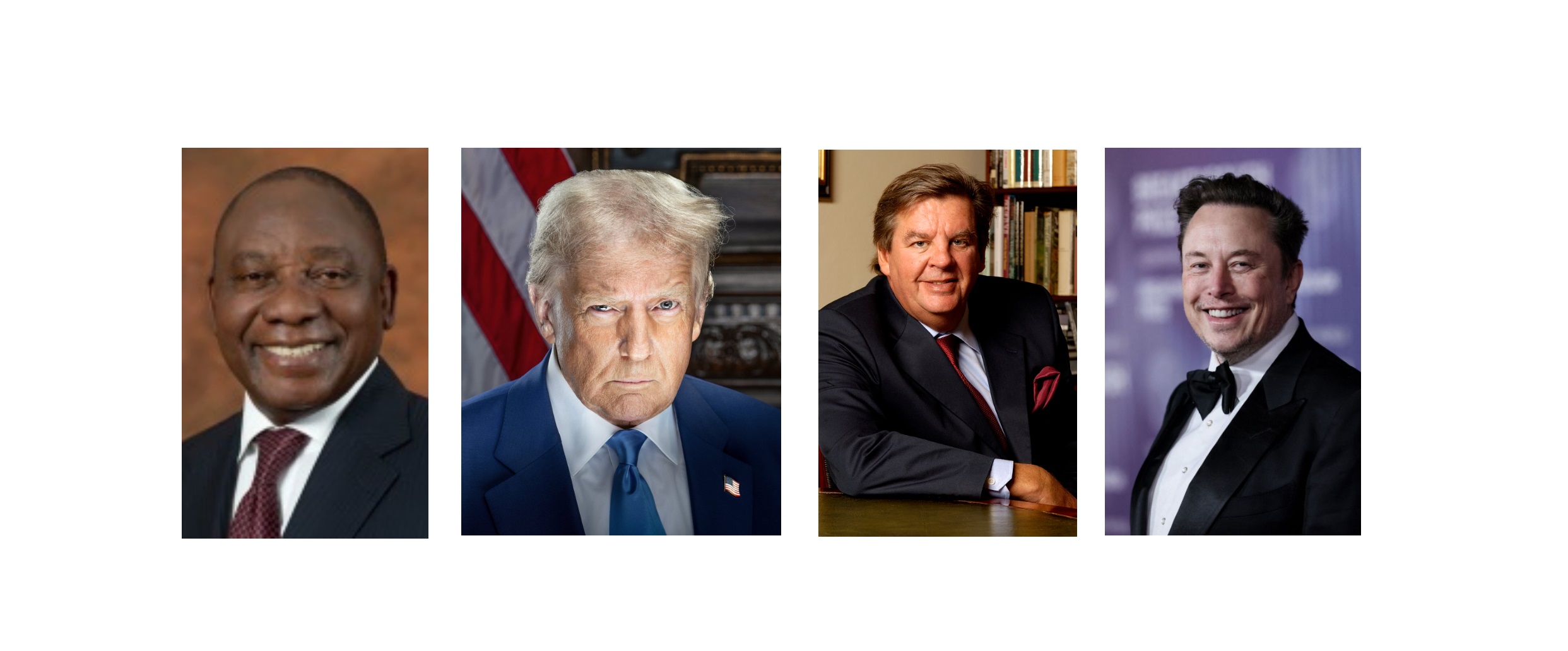
WASHINGTON D.C. – As South African President Cyril Ramaphosa prepares for his make-or-break meeting with US President Donald Trump at the White House today, a surprising element has emerged from the South African delegation: the presence of prominent South African billionaires and a strategic focus on engaging global tech giant Elon Musk. This powerful, yet potentially politically fraught, alignment of business acumen and high-stakes diplomacy underscores the critical economic undertones of the visit.
Among the notable figures joining President Ramaphosa’s contingent is Johann Rupert, South Africa’s richest man and a prominent figure in the luxury goods and mining industries. Rupert’s involvement is far from coincidental; reports suggest he played a key role in facilitating this meeting, driven by his frustration with Trump’s “white genocide” narrative and its damaging impact on South Africa’s international image and economy. As an Afrikaner farmer himself, Rupert’s presence is seen as a strategic move to directly counter the misinformation and bridge the understanding gap with the US administration, particularly with a businessman-turned-president like Trump.
Beyond the formal government delegation, the South African side is also reportedly leveraging the presence of internationally renowned golfers Ernie Els and Retief Goosen. While seemingly an unusual inclusion for a diplomatic visit, sources indicate this is a deliberate tactic to appeal to President Trump’s known passion for golf. The hope is that shared interests on the green could “sweeten” the potentially acrimonious talks and open avenues for more relaxed, constructive engagement.
Adding another layer of intrigue is the ongoing focus on Elon Musk, the South African-born tech titan and a close ally of President Trump. South Africa’s government is reportedly prepared to offer Musk a workaround to its local Black Economic Empowerment (BEE) laws, which typically require a 30% Black ownership stake for telecommunications licenses. This “equity equivalent” option, which could involve investments in infrastructure or training, is aimed at allowing Musk’s Starlink internet service to operate in South Africa. This potential deal is seen as a crucial olive branch, designed to defuse criticism from both Musk and Trump, who have both amplified the false “white genocide” narrative, with Musk even claiming Starlink was blocked due to his race.
The strategic inclusion of these influential business figures alongside the core government delegation highlights the multifaceted approach South Africa is taking to navigate this challenging diplomatic landscape. The underlying message is clear: South Africa is open for business, even in the face of political disagreements. By bringing economic heavyweights to the table, Ramaphosa’s government aims to shift the conversation from contentious political rhetoric to mutually beneficial economic opportunities.
However, the presence of such influential billionaires and the pursuit of specific deals like the Starlink workaround are not without their critics within South Africa. Some political analysts and opposition figures have voiced concerns that the visit could be seen as an attempt by powerful “white capital interests” to influence government policy, potentially at the expense of broader national interests and the principles of transformation.
As Ramaphosa and Trump sit down today, the blend of traditional diplomacy, strategic soft power, and direct business engagement will be on full display. The success of this high-stakes meeting may well hinge on whether the shared language of business and mutual economic benefit can overcome the deeply rooted political tensions that have defined the US-South African relationship in recent times.